How Are Paper Plates Made? The Process, Step by Step
Quick answer
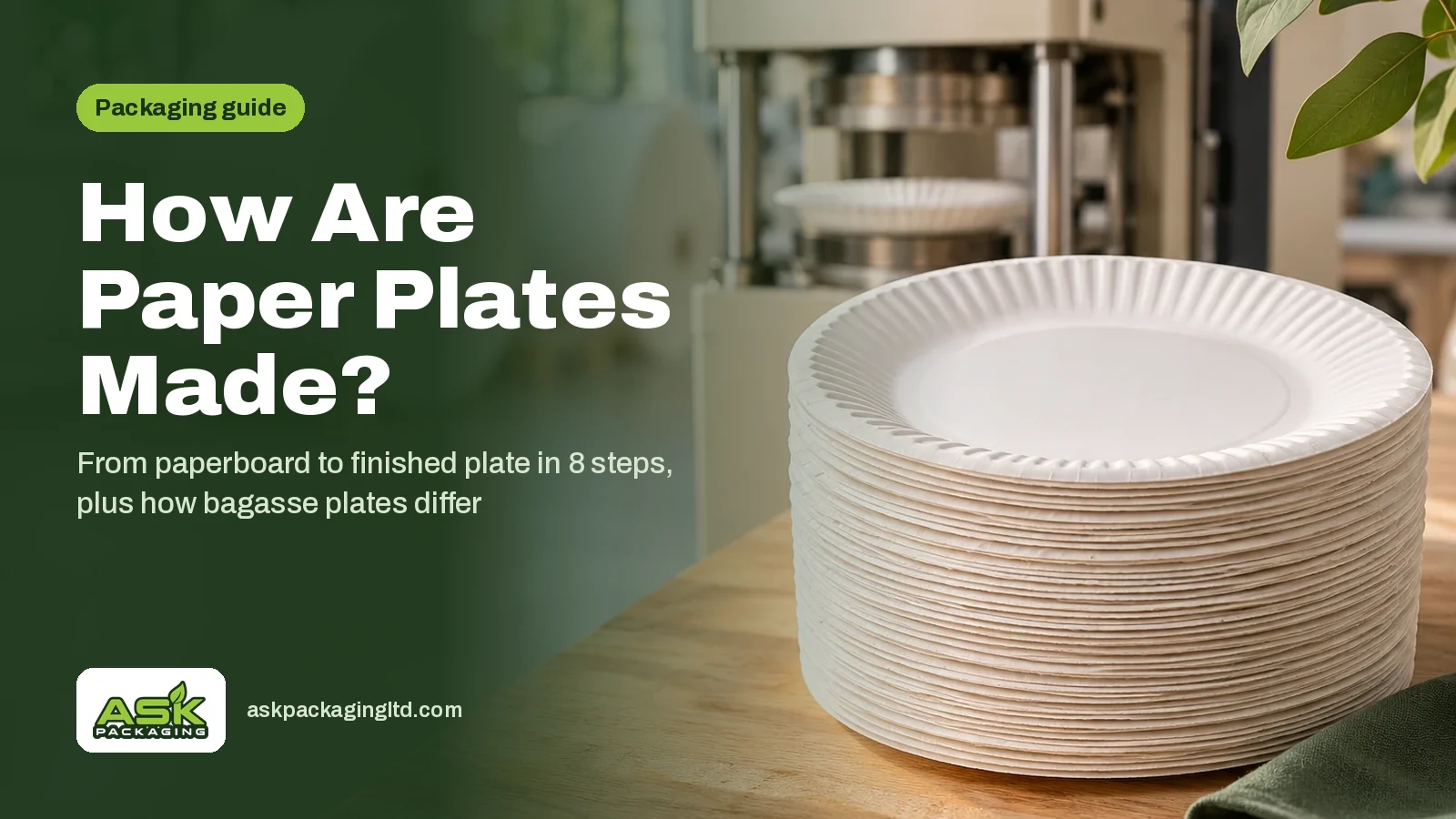
Paper plates are made by turning wood pulp into paperboard, adding a grease barrier if needed, cutting the board into flat blanks and pressing each blank in a heated die. The heat and pressure set the rim and shape. The plates are then counted, checked and packed.
Key takeaways
- Most paper plates are made from paperboard, which is thick paper made from wood pulp.
- The plate shape comes from a heated metal die that presses a flat blank into a rim.
- Coatings decide how well a plate handles grease, and how it can be disposed of.
- Bagasse plates are not pressed from board. They are moulded from sugarcane pulp, so they are thicker.
What are paper plates made of?
A paper plate starts life as paperboard: a thick, stiff paper made from wood fibre. The fibre can be new (virgin) pulp, recycled pulp or a mix. Virgin fibre is common for food contact because it is clean and consistent.
On its own, plain board soaks up grease and water. So many makers add a barrier. That might be a clay or mineral coating, a water-based barrier coating, or a thin plastic film such as polyethylene (PE). Some plates have no barrier at all and are meant for dry food such as cake or sandwiches.
| Part | What it is | Why it matters |
|---|---|---|
| Paperboard | Thick paper from wood pulp | Gives the plate its body and stiffness |
| Barrier coating (optional) | Clay, water-based or PE film | Stops grease and moisture soaking in |
| Inks (optional) | Food-safe printing inks | Adds colour or patterns |
| Moisture | Small amount added before pressing | Helps the board bend without cracking |
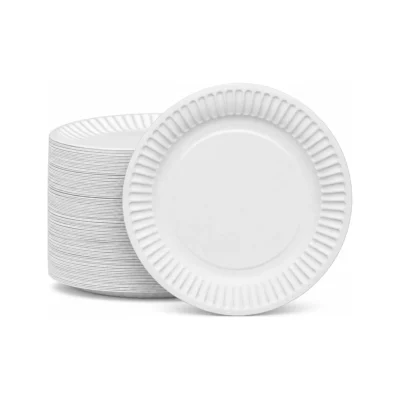
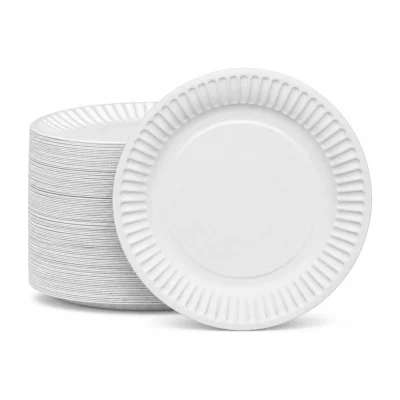
Our own white paper plates are made from wax-free, food-grade paper. They suit cake, snacks, sandwiches and buffets. For hot, saucy meals we point customers to bagasse plates instead.
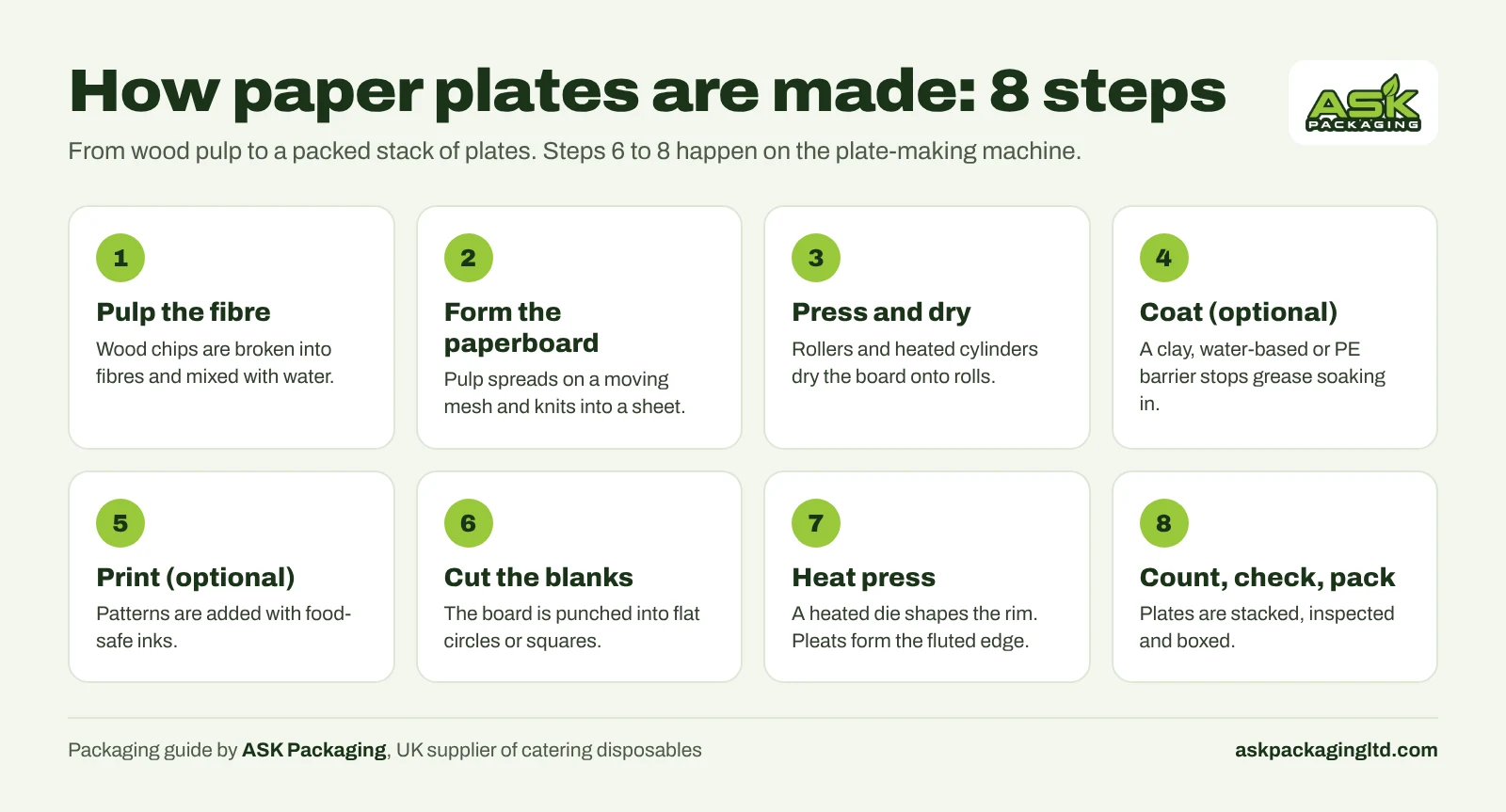
How paper plates are made, step by step
Factories differ in speed and machinery, but almost every paper plate goes through the same eight stages.
1. Pulping the fibre
Wood chips are broken down into fibres, mechanically or with cooking chemicals. The fibres are washed, screened and mixed with water to make a thin slurry called pulp.
2. Forming the paperboard
The pulp is spread onto a moving wire mesh. Water drains away and the fibres knit together into a continuous wet sheet. Several layers can be combined to build thickness.
3. Pressing and drying
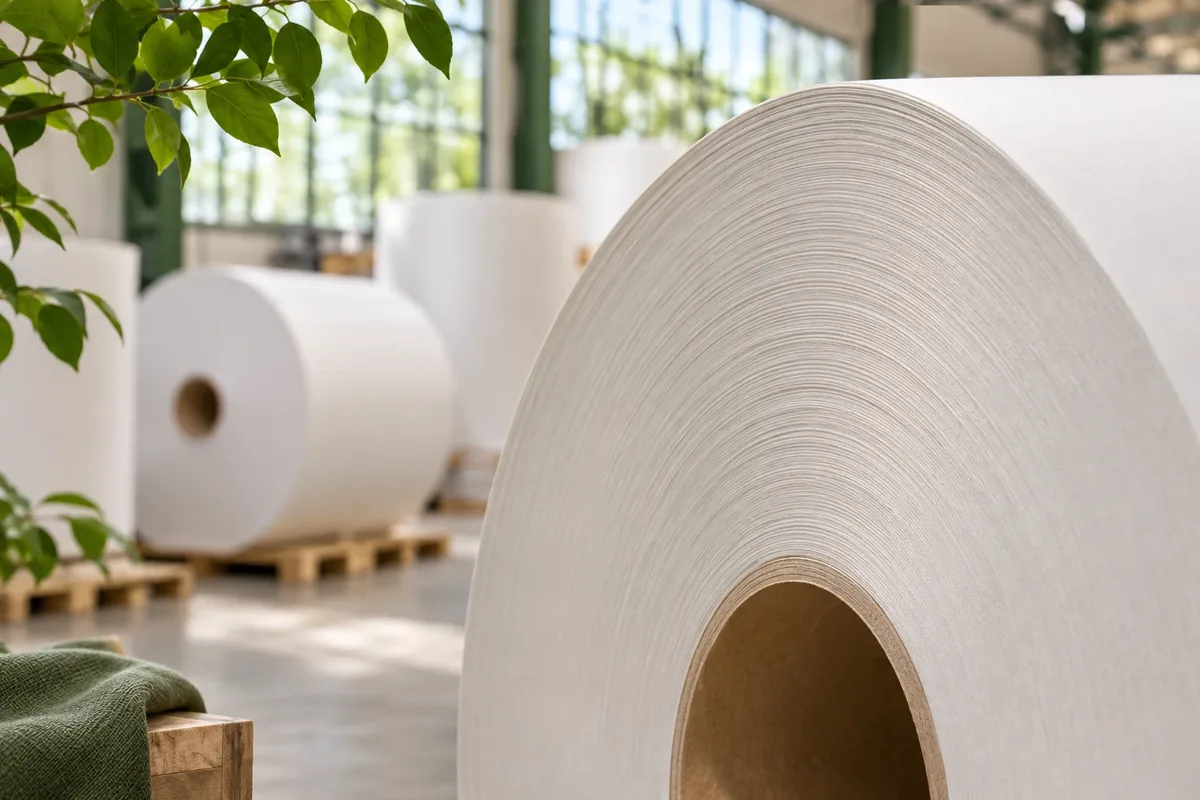
Rollers squeeze out more water, then heated cylinders dry the sheet. The finished board is wound onto large rolls. Board for plates is usually far heavier than printer paper.
4. Coating for grease resistance
If the plate needs a barrier, the board is coated at this stage. The choice of coating affects performance with oily food and how the plate is treated under waste rules.
5. Printing (optional)
Patterned or coloured plates are printed with food-safe inks before cutting. Plain white plates skip this step.
6. Cutting the blanks
The board is fed into a cutter that punches out flat circles or squares called blanks. Each blank is a little larger than the finished plate, because some width goes into the rim.
7. Heat pressing the plate shape
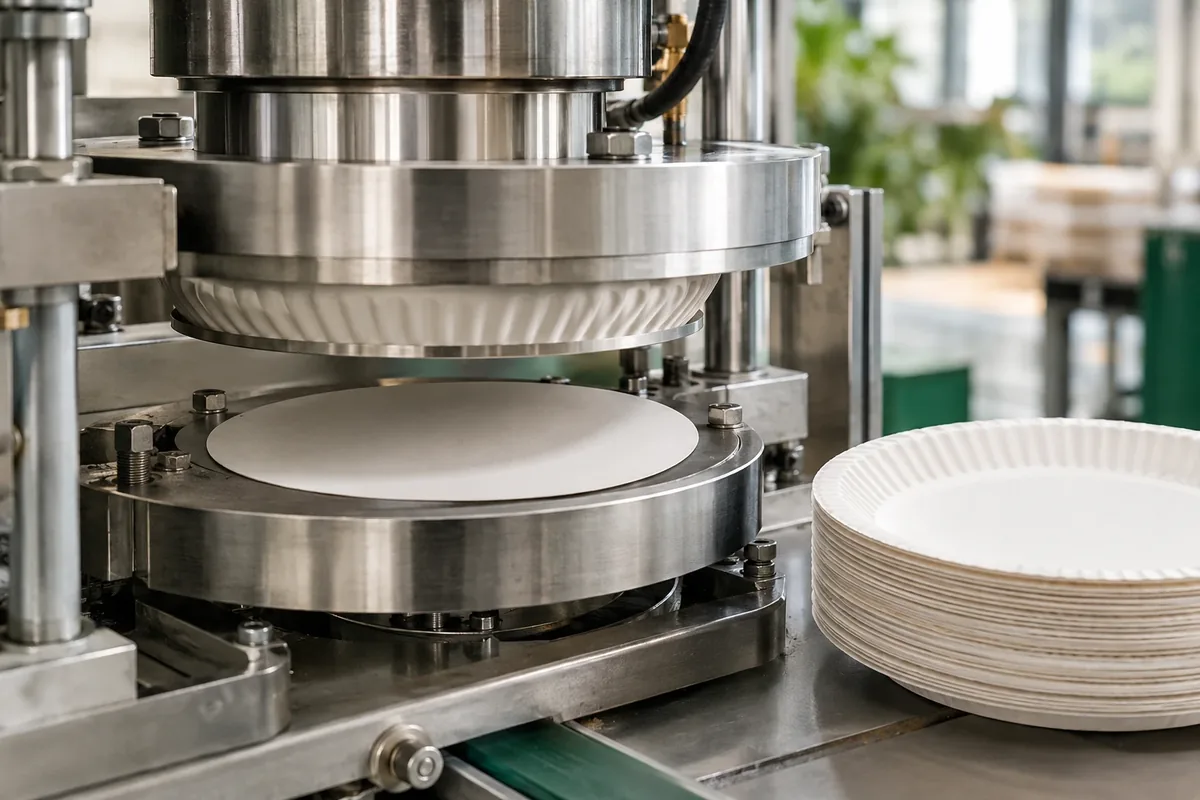
This is the step most people mean by “how are paper plates made”. Each blank goes between a heated upper and lower metal die. The press closes, the board stretches and pleats into a rim, and the heat sets the shape. The fluted ribs you see on many paper plates are the pleats formed here. They add strength.
8. Counting, checking and packing
Plates are stacked, counted and checked for cracks, poor rims and marks. They are then sleeved and boxed in packs, ready to ship.
 Open full size
What does a paper plate making machine do?
A paper plate machine combines steps 6 to 8. Small workshops use manual or semi-automatic presses, where an operator feeds each blank. Larger plants use fully automatic machines that feed board, press, eject and stack in one cycle. Hydraulic machines press harder and suit thicker plates. Mechanical machines are faster for thinner plates.
Whatever the machine, three settings control quality: die temperature, pressing time and pressure. Too cool and the rim springs back. Too hot and the board scorches.
Paper plates with and without a plastic coating
Search data shows many buyers now look for paper plates without plastic coating. Here is why it matters.
- No coating: fine for dry food, cake and sandwiches. Grease can soak through with oily food.
- Clay or water-based coating: resists grease better without a plastic film.
- PE (plastic) film: very resistant to liquids, but the plate is then partly plastic.
In England, single-use plates that are wholly or partly made of plastic, including paper plates with a plastic coating or lining, are covered by the single-use plastics rules. Supply to the public is restricted, with exemptions such as plates filled at the point of sale. If you want to avoid plastic altogether, choose an uncoated or non-plastic paper plate, or a bagasse plate.
How bagasse plates are made
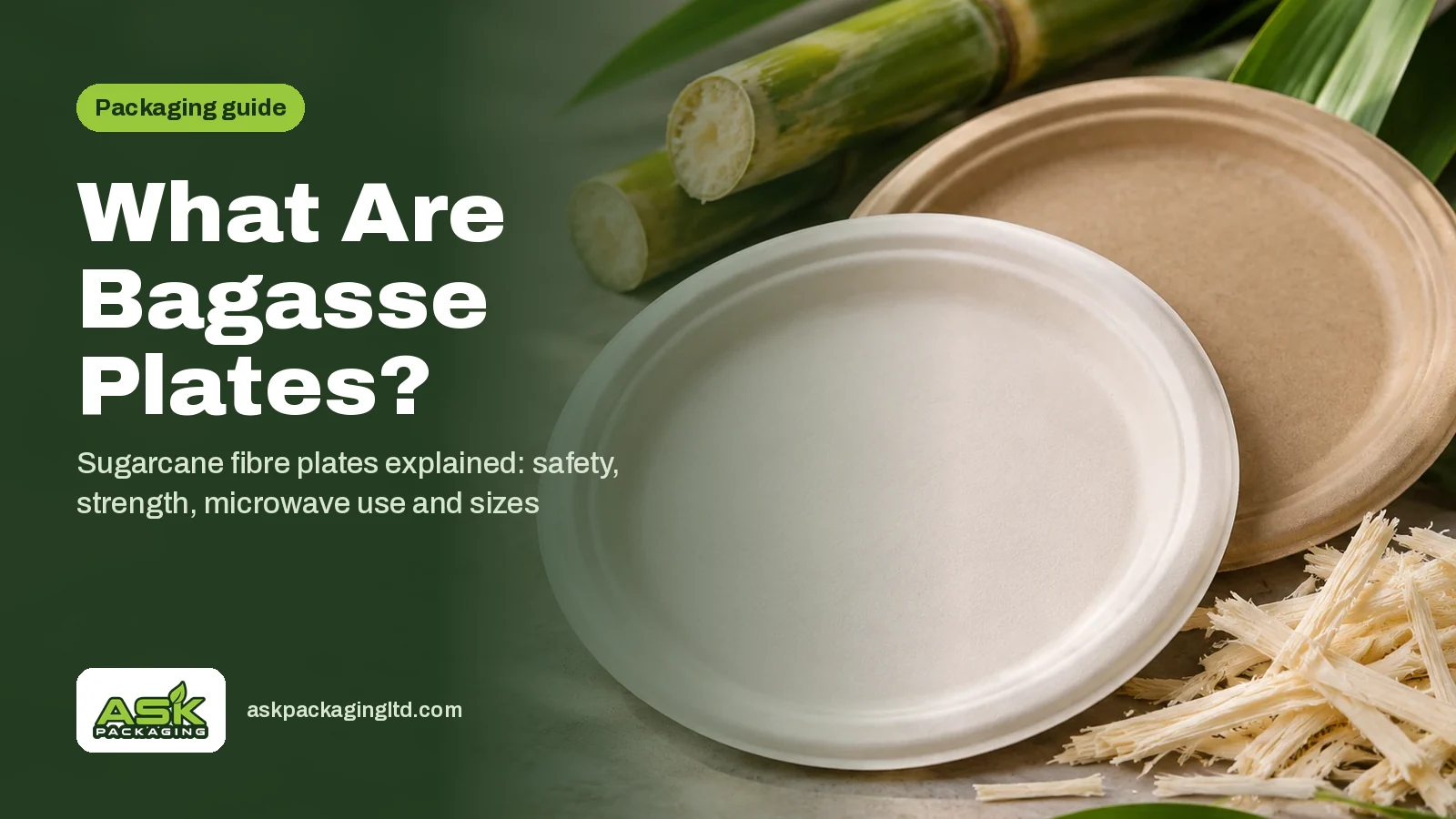
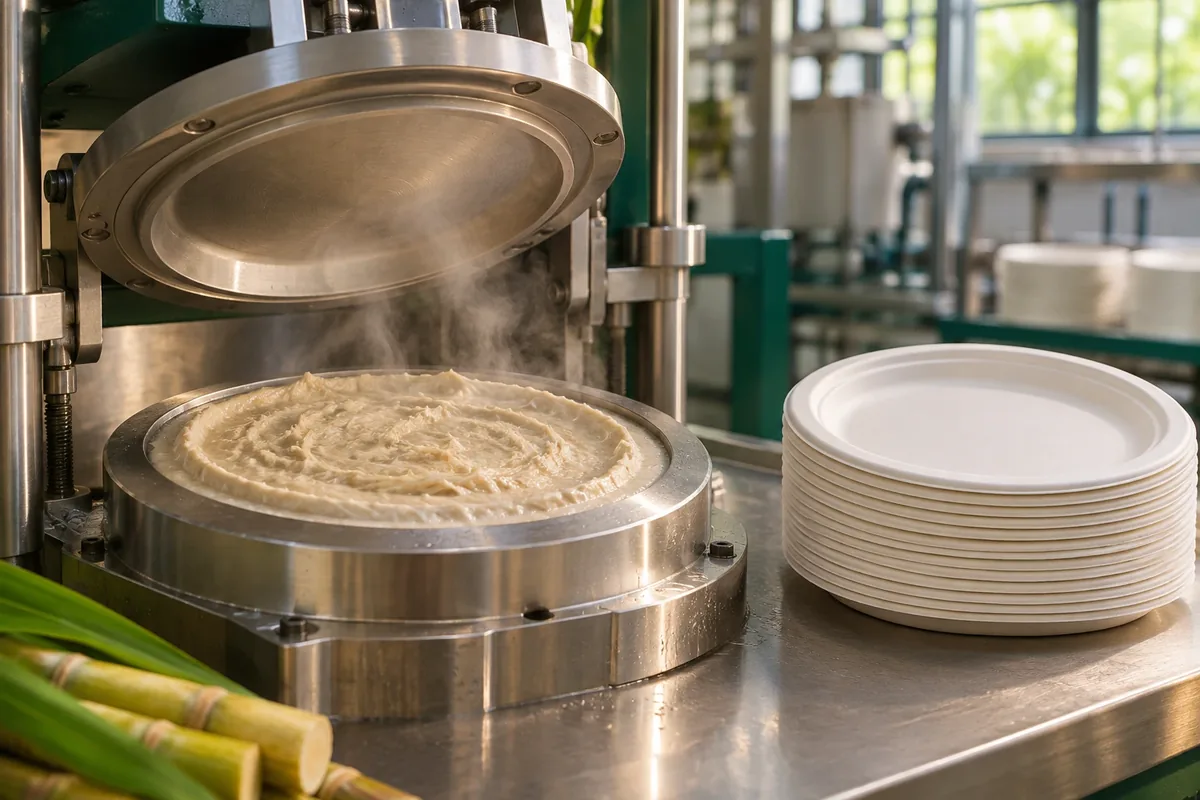
Bagasse plates follow a different process. Bagasse is the fibre left after sugarcane is crushed for its juice.
- The fibre is cleaned and mixed with water into a pulp.
- The pulp is drawn onto a plate-shaped mould.
- Hot dies press the wet pulp, squeezing out water and setting the shape.
- The plates are trimmed, checked and packed.
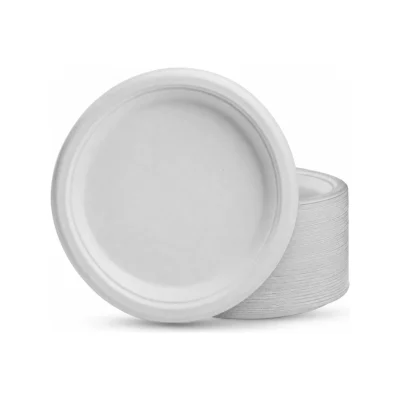
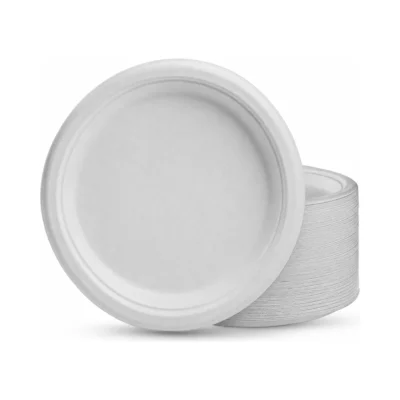
Because a bagasse plate is moulded in one piece from pulp, it is thicker and more rigid than a pressed paper plate. That is why it copes better with curry, gravy and chips. Our bagasse plates are also microwave and freezer safe. Read more in our guide to what bagasse plates are.
Paper plates vs bagasse plates
| Paper plates | Bagasse plates | |
|---|---|---|
| Raw material | Paperboard from wood fibre | Sugarcane fibre (bagasse) |
| How it is shaped | Flat blank pressed in a heated die | Wet pulp moulded under heat and pressure |
| Feel | Thin, light, flexible | Thick, rigid, smooth |
| Best for | Cake, snacks, sandwiches, buffets | Hot meals, curry, BBQ, heavy portions |
| Microwave | Check the product | Ours are microwave safe |
| Our range | 7 and 9 inch white | 7 to 12 inch, white and brown, square, compartment, pizza |
Do paper plates contain gluten?
This question gets asked a lot. Paper plates are made from wood fibre, not wheat, barley or rye, so the plate is not a gluten-containing food. Some manufacturing aids can use starches, so if you are catering for guests with coeliac disease, ask the supplier for a written statement and keep food prepared separately to avoid cross-contact.
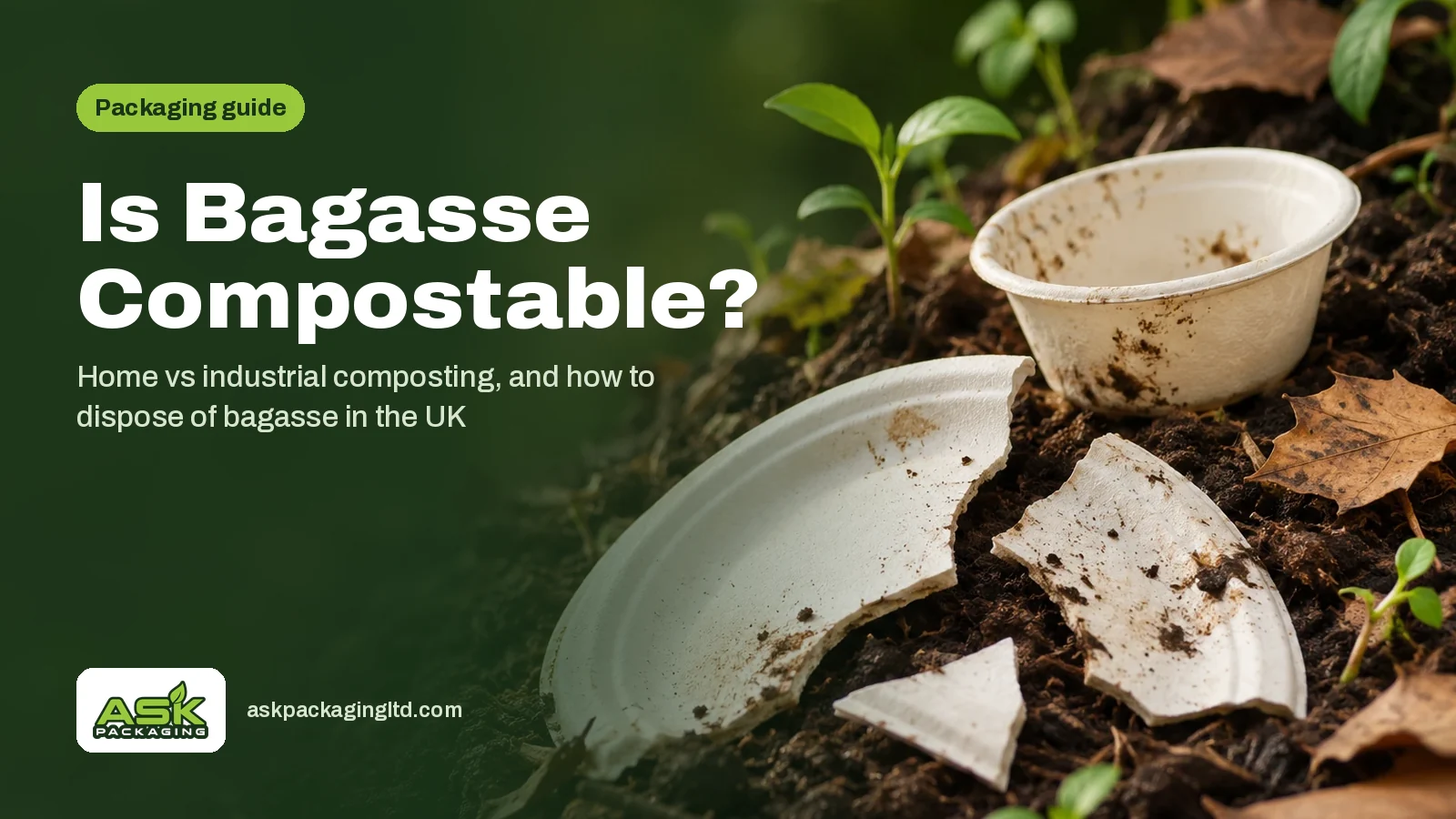
Are paper plates recyclable or compostable?
It depends on the coating and how dirty the plate is.
- Clean, uncoated plates may be accepted with paper and card. Check your council or waste contractor.
- Food-soiled plates are often rejected from paper recycling.
- PE-coated plates are hard to recycle in normal paper streams.
- Packaging labelled compostable cannot go in England’s workplace food-waste bins under Simpler Recycling. Use a dedicated compostables collection or general waste.
Common mistakes when choosing paper plates
- Using thin paper plates for hot, oily food. Grease soaks through and the plate bends. Use a bagasse plate.
- Buying by price per pack, not per plate. Compare the cost of each plate across pack sizes.
- Choosing the wrong size. A 7 inch plate is a side plate. A main meal needs 9 inch or bigger. See our plate size guide.
- Assuming every paper plate is plastic-free. Check whether it has a plastic film.
Products in this guide
Prices include VAT, with free UK mainland delivery and no minimum order.
Frequently asked questions
What is the main raw material for paper plates?
The main raw material is paperboard made from wood pulp, sometimes recycled fibre. Many plates also carry a grease barrier, such as a clay, water-based or thin plastic coating.
How are fluted rims on paper plates formed?
The ribs form in the heated press. As the flat blank is pushed into the die, the board pleats around the edge, and those pleats stiffen the rim.
Can I make paper plates at home?
You can shape simple plates from card with a bowl and glue, but they will not be food-safe or grease resistant like factory-pressed plates made from food-grade board.
Why do some paper plates go soggy?
Uncoated or thin board absorbs grease and moisture from hot, saucy food. A coated plate or a moulded bagasse plate holds up far better for curry, gravy and chips.
Are paper plates with a plastic coating banned in England?
Single-use plates partly made of plastic, including plastic-lined paper plates, are restricted for public supply in England, with exemptions such as plates filled at the point of sale.
What is the difference between paper plates and bagasse plates?
Paper plates are pressed from paperboard made of wood fibre. Bagasse plates are moulded from sugarcane fibre pulp, which makes them thicker, stiffer and better for hot meals.
How long does it take to make a paper plate?
The pressing step takes only a few seconds per plate on an automatic machine. Making the paperboard itself happens earlier, on large paper machines running continuously.
Sources
- GOV.UK: Single-use plastics ban – plates, bowls, trays, containers, cutlery and balloon sticks
- GOV.UK: Simpler Recycling – workplace recycling in England
Checked on 12 November 2026. Rules change, so always check the latest official guidance.
About ASK Packaging
ASK Packaging Ltd supplies plates, bowls, food containers, bags, cups, napkins and cutlery to cafés, takeaways, caterers and event hosts across the UK. We are based in Wellingborough, Northamptonshire, and have been trading since 2018. Our guides are written from the questions our customers ask us every day.