Home / Blog
Packaging Guides and Advice
Practical advice for takeaways, cafés, caterers and party hosts: which size to buy, what packaging costs per order, which material suits which food, and what the rules on plastic in England mean for you.
- Per orderreal packaging costs
- Sizesin inches, cm and ml
- RulesEngland plastics ban
Work out your packaging costs
Takeaway packaging cost per orderCurry for two about 63p, burger meal about 25p, with a monthly calculator.Catering cost per coverHot buffet, canteen lunch and coffee break costs, plus a monthly order.How much to order per guestPlates, cups and napkins per guest for weddings, BBQs and parties.Wholesale pallet builderMix 50 full boxes and see your wholesale saving line by line.
Choose the right product
Disposable plates by size7 to 12 inch plates in bagasse and paper, round, square and compartment.Bowls for soup, salad and noodles240ml to 1000ml bagasse and kraft bowls, with and without lids.Takeaway food containersHinged and separate-lid containers for hot food, salads and meal prep.Paper bags by sizeStrung food bags and kraft bags with handles, with what fits in each.
Materials and disposal
Compostable tablewareBagasse, kraft and wood: where each material works and how to dispose of it.Wooden cutleryBirch forks, knives and spoons, and what the plastic cutlery ban means.Reusable plastic cutleryClear and black cutlery made to be washed and used again.Questions about materialsBagasse, microwave use, compostability and recycling in one place.
Latest articles
New guides appear here as soon as they are published.
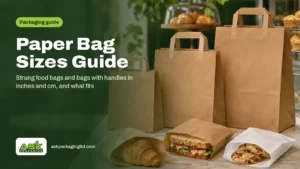
- Paper Bag Sizes Guide: Which Bag Fits What?
 Our flat strung paper bags come in 7, 8.5, 10 and 12 inch squares, about 18, 21.6, 25.4 and 30.5cm. Our kraft bags with handles come in small (23 x 18 x 9cm), medium (25.5 x 21.5 x 11.5cm) and large (30.5 x 25.5 x 14cm), measured height x width x gusset.
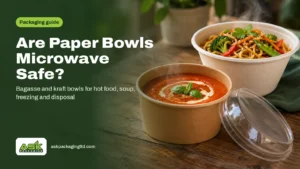
- Are Paper and Bagasse Bowls Microwave Safe and Compostable?Our bagasse bowls are microwave and freezer safe, and our kraft paper bowls are microwave safe once the clear plastic lid is removed. Bagasse suits soup, curry and noodles eaten on site, while kraft bowls with lids suit takeaway and delivery. Our bagasse bowls are commercially compostable where facilities accept them.
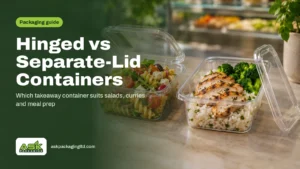
- Hinged vs Separate-Lid Food Containers: Which Should You Use?Hinged containers have a lid attached to the base, so they close in one movement and suit cold food such as salads, sandwiches and desserts. Separate-lid containers have a press-on lid that seals all round, so they suit curries, meal prep and reheating. Our hinged PET range is not microwave safe. Our separate-lid range is, with the lid loosened.
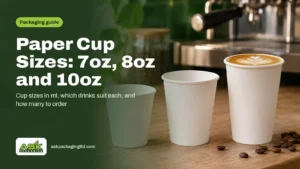
- Paper Cup Sizes Explained: 7oz, 8oz and 10ozThe three most common paper cup sizes are 7oz (about 200ml) for water and vending, 8oz (about 240ml) for a regular tea or coffee, and 10oz (about 290ml) for lattes, cappuccinos and larger drinks. Cups are rarely filled to the brim, so the drink served is a little less.
- Single-Use Plastic Ban in England: What Caterers Can Still UseSince 1 October 2023, businesses in England cannot supply single-use plastic cutlery, balloon sticks, drinks stirrers or expanded and extruded polystyrene food and drink containers. Single-use plastic plates, bowls and trays are restricted, with exemptions such as items filled at the point of sale. Compostable and biodegradable plastics are included.
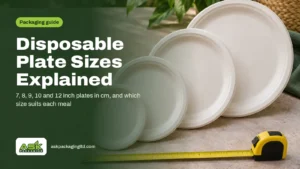
- Disposable Plate Sizes: Which Size Do You Need?The most useful disposable plate sizes are 7 inch (18cm) for cake, starters and sides, 9 inch (23cm) for a standard meal, 10 inch (26cm) for a large meal with sides, and 12 inch (31cm) for buffets and sharing. Plates are measured across the full width, rim included.
- Is Bagasse Compostable? What UK Businesses Need to KnowYes, bagasse is a plant fibre that breaks down, and certified bagasse products are compostable in industrial composting facilities. Home composting is slower and less predictable. In England, compostable packaging cannot go in workplace food-waste bins, so use a dedicated compostables collection or general waste.
- What Are Bagasse Plates? A Plain-English GuideBagasse plates are disposable plates moulded from sugarcane fibre, the pulp left after sugarcane is crushed for juice. They are thicker and stiffer than paper plates, resist oil and water, and hold hot, saucy food. Our bagasse plates are microwave and freezer safe.
- How Are Paper Plates Made? The Process, Step by StepPaper plates are made by turning wood pulp into paperboard, adding a grease barrier if needed, cutting the board into flat blanks and pressing each blank in a heated die. The heat and pressure set the rim and shape. The plates are then counted, checked and packed.